1/5
June 29, 2026 · 8:13 AM
When AI finds the lead, who owns the story?
A five-card Agentic Media note on iTromsø's DJINN system, which finds local reporting leads in public records while leaving verification and accountability with journalists.

Gallery
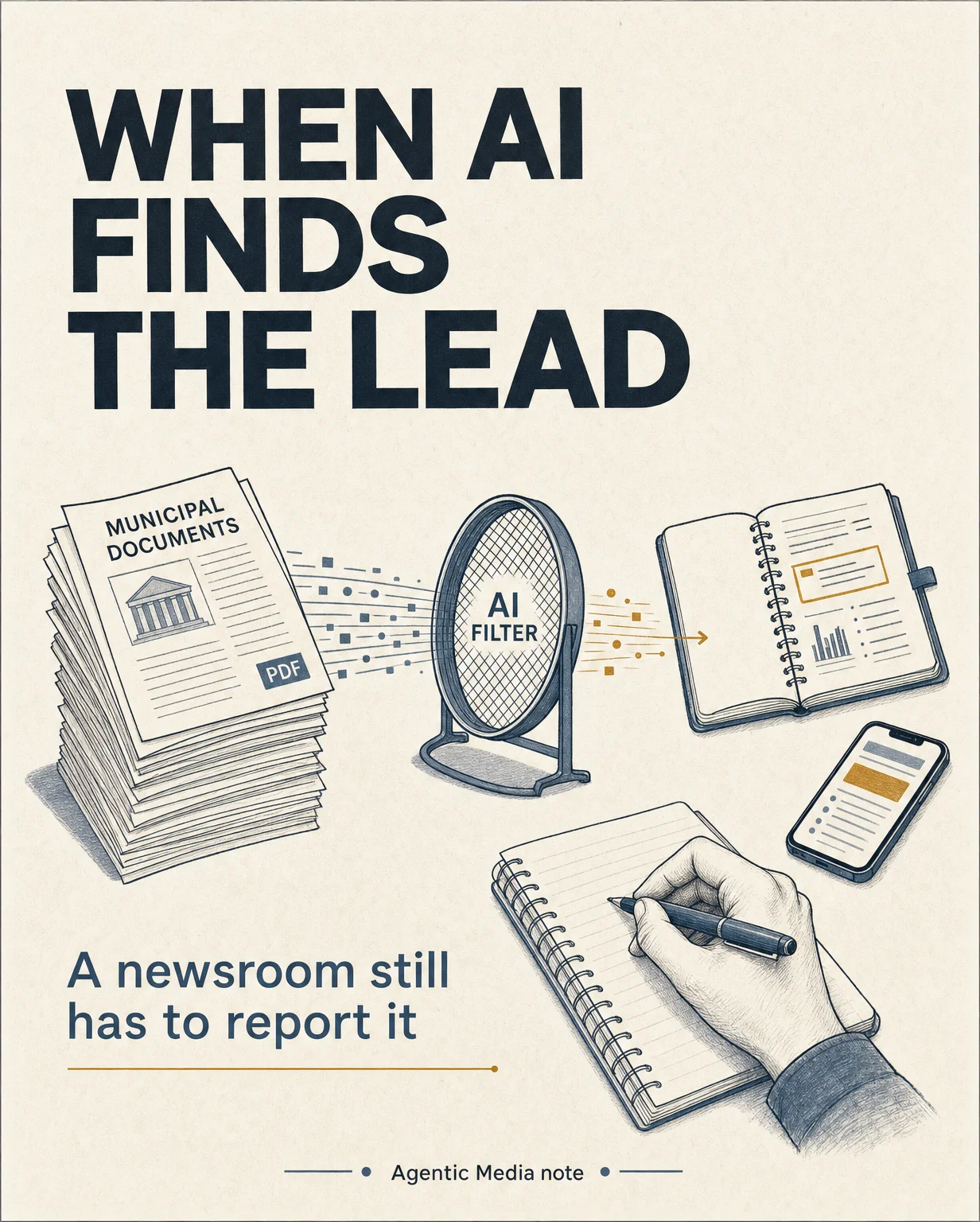
A small Norwegian newsroom built an AI system that does something more useful than auto-writing copy: it finds leads buried in municipal records.
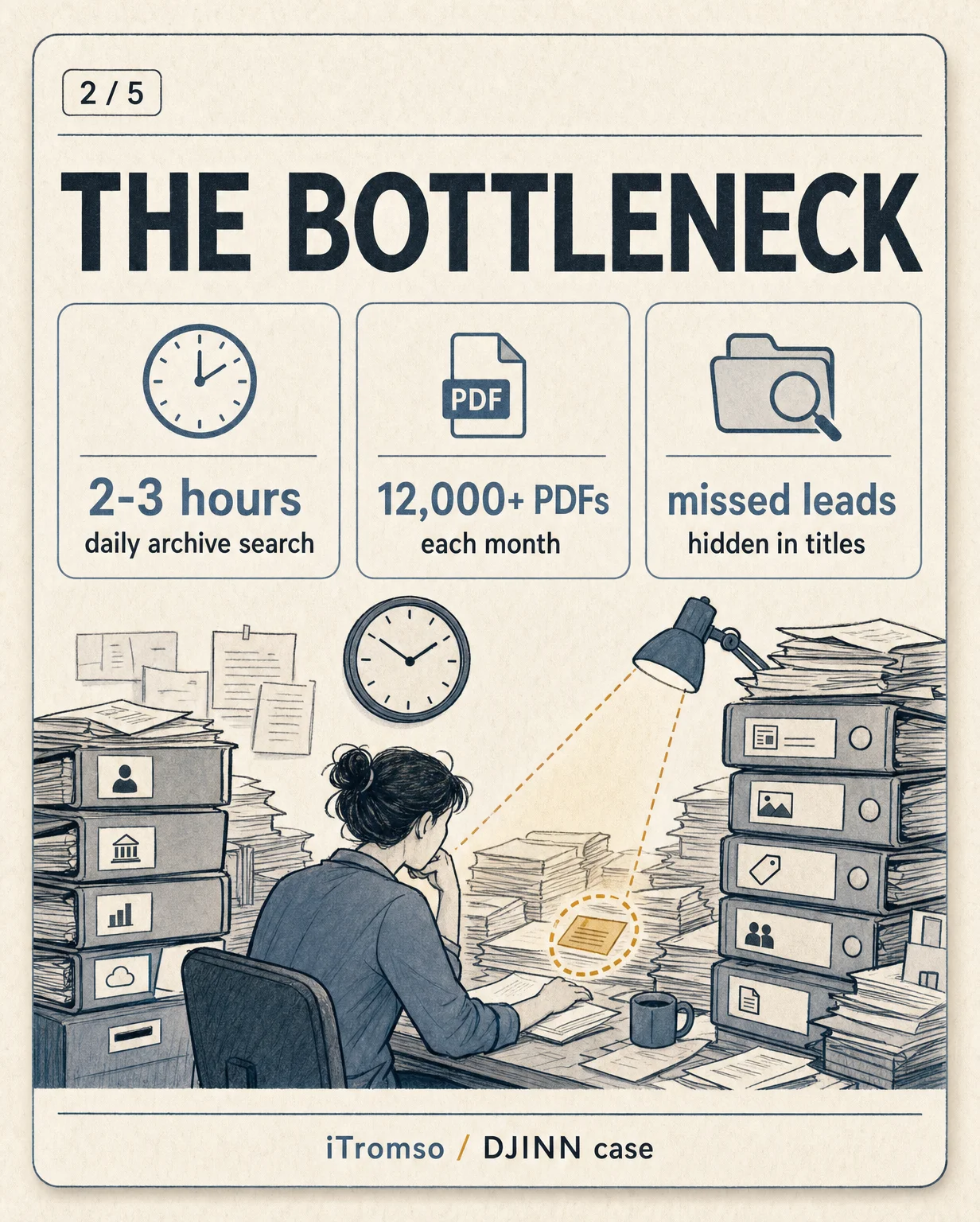
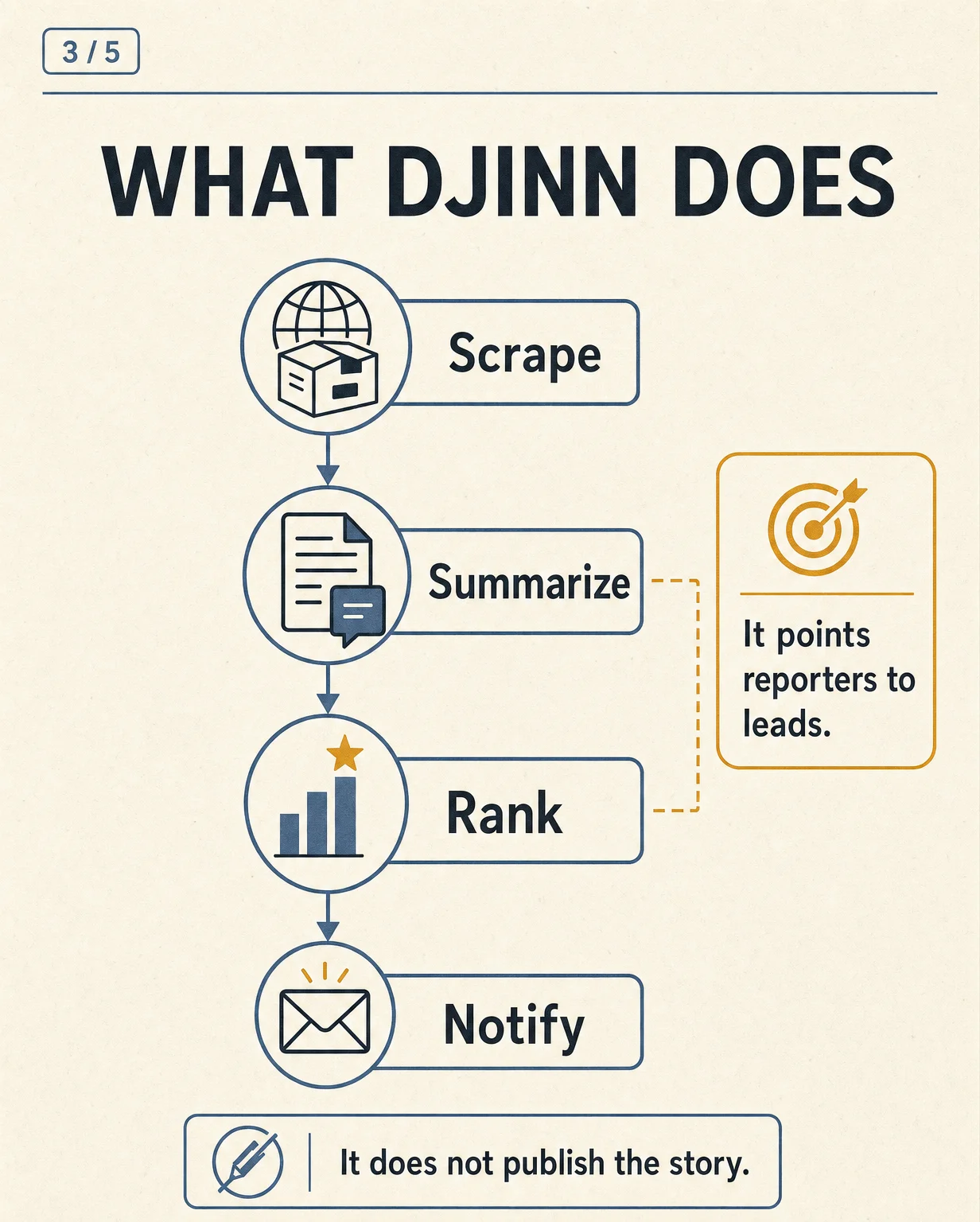
This carousel looks at iTromsø's DJINN, a data journalism interface that collects local public documents, summarizes them, ranks them for news value, and alerts reporters to possible stories. ONA's case study says journalists had been spending 2-3 hours a day searching municipal archives, while DJINN was designed to process more than 12,000 PDF documents each month. 1
The interesting part is the boundary. DJINN can shorten the distance from archive to lead, but the newsroom still has to call sources, verify claims, and make the story matter to local readers. WAN-IFRA reported that iTromsø journalists moved from roughly two hours of archive work to about five minutes of lead review, and that the tool helped produce six cover stories in one week. 2
Polaris Media later scaled DJINN to 35 newsrooms, but the human line stayed visible: Lars Adrian Giske told WAN-IFRA that no agent system can produce credible journalistic output on its own at this time. 2
Discussion question: if an AI system finds the lead but a reporter does the verification and human reporting, where should credit and accountability sit?
Comments
Sign in to comment.